

Furnaces are supposed to keep your home warm and dry, not leave puddles on the floor. So when you spot water pooling around your unit, it can be a frustrating and confusing problem. You’re probably asking yourself: Why is my furnace leaking water, and what should I do about it?
In this blog, you’ll learn the most common causes of furnace leaks, how to identify them, and which ones you can safely handle versus the ones that require a professional. Water around your furnace is never normal, but not all leaks mean a full system replacement either. Let’s break it down.
Condensation Leak: The Most Common Culprit
If your furnace is a high-efficiency condensing model, it likely produces condensation during the heating process. This moisture typically drains through a small PVC pipe that leads to a floor drain or condensate pump.
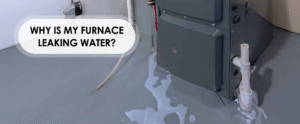
But if that drainage system gets clogged, disconnected, or damaged, the condensation has nowhere to go. Instead, it spills out onto the floor around the unit. This is one of the most common causes of a water leak in modern furnaces.
Look for a white PVC pipe running from your furnace. If you see water trickling from a joint or a puddle forming underneath, chances are the drain line is blocked or the condensate pump has failed.
This issue is usually fixable with routine maintenance or a simple repair. But if ignored too long, it can lead to water damage, mold, or corrosion inside your unit.
Clogged or Cracked Drain Pan
In some systems, the furnace shares components with the air conditioner. That means your furnace might have a drain pan that collects condensation during cooling season. If that pan becomes clogged with debris or develops a crack, it can start to leak.
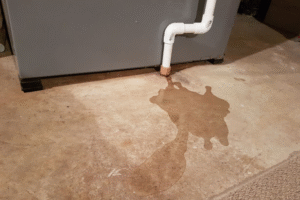
This is especially common if the system hasn’t been cleaned in a while. The standing water can eventually overflow, causing damage to the surrounding floor or lower components of your furnace.
Checking the drain pan and cleaning it regularly during seasonal tune-ups helps avoid these kinds of problems.
Humidifier Issues
If your furnace has a built-in humidifier, that could also be the source of the leak. Whole-home humidifiers connect to the water line and are installed directly onto the furnace. When they malfunction or become clogged with scale, they can leak water directly into the furnace or onto the floor below.
Over time, mineral buildup from hard water can block the drain lines or crack components. Since the humidifier is integrated into the furnace cabinet, the leak might look like it’s coming from the furnace itself when it’s really the accessory causing trouble.
If you see water coming from higher up on the unit, especially near where the humidifier is mounted, that’s a strong clue.
Broken Condensate Pump
For furnaces located in basements or crawlspaces where gravity drainage isn’t possible, a condensate pump is used to push water out and away from the system. When this pump fails or its float switch sticks, water starts to back up and leak around the furnace.
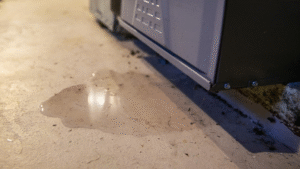
You’ll often hear a humming noise without any water movement, or the pump may be completely silent when it should be running. A replacement pump is usually inexpensive and quickly installed by a technician.
Leaky Plumbing or Nearby Appliances
Sometimes, the issue isn’t with the furnace at all. A leaking water heater, pipe, or washing machine nearby can create puddles that make it appear like the furnace is leaking.
Check around your furnace for any pipes or appliances sharing the same space. A careful inspection may reveal the leak is coming from something else entirely.
Cracked Heat Exchanger (Rare but Serious)
In rare cases, a leaking furnace could be the result of a cracked heat exchanger. This is more likely to occur in older furnaces that haven’t been maintained properly.
A damaged heat exchanger can allow moisture and combustion gases to leak out. This situation is serious and can be dangerous, as it may also allow carbon monoxide to escape into your home.
Signs of a cracked heat exchanger include water pooling with a metallic or musty smell, visible rust inside the furnace, and decreased heating performance. If you suspect this issue, turn off the furnace and call a technician right away.
Is It Safe to Keep Running a Leaking Furnace?
In short, no. Even a small leak can lead to long-term problems. Water and electricity don’t mix, and moisture can corrode internal components, short-circuit electronics, or damage the blower motor.
It’s also a potential safety hazard for your home. Wet floors increase the risk of slips or mold growth. And if the problem is tied to your condensate pump or humidifier, ignoring it could eventually shut the system down entirely.
Until the source of the leak is identified and resolved, it’s best to stop using the system and call a professional.
Can I Fix It Myself?
There are a few things you can safely check on your own:
- Make sure the condensate drain line is connected and not visibly clogged
- Inspect the area around the unit for water coming from other sources
- Clear any debris from the visible drain pan, if accessible
- Ensure your air filter is clean to reduce strain on the system
However, if the leak continues or you’re unsure of the source, it’s time to call in a trained HVAC technician. They can test the system thoroughly, check hidden components, and perform repairs safely.
Prevent Furnace Leaks with Regular Maintenance
Most furnace leaks are avoidable with regular seasonal maintenance. During a heating tune-up, your technician will inspect the condensate line, check for drain clogs, test the humidifier, and catch small issues before they become bigger problems.
A small investment in routine service helps you avoid water damage, heating interruptions, and unexpected costs. Plus, it keeps your warranty valid and your system running at its best through the heating season.
When to Replace Instead of Repair
If your furnace is over 15 years old and leaking water, it might be time to consider replacement instead of just repair. Older systems are more prone to internal rust, heat exchanger issues, and inefficient operation.
A leaking furnace could be a sign of age-related wear rather than a one-time fix. Replacing the unit with a newer, high-efficiency model can improve comfort, lower energy bills, and eliminate recurring repair costs.
Your HVAC professional can help you weigh the pros and cons of repair versus replacement based on your specific situation.
Call Polar Aire for Trusted Furnace Repairs and Leak Solutions
If you find water leaking from your furnace, don’t wait to get it checked. The longer a leak goes unresolved, the more risk you take on.
At Polar Aire, we provide honest answers, fast service, and expert furnace repairs for homeowners across the Gallatin Valley. Whether it’s a simple drain issue or something more serious, we’ll find the problem and fix it right the first time.
Need a second opinion? We offer those for free. Want to prevent leaks before they happen? Ask about our Comfort Club maintenance program.
Contact us today to schedule a furnace inspection or leak repair. Let us help you keep your home warm, dry, and worry-free.